Free course
Manage your business Instagram
How to clean up your profile, write captions people actually read, and run a weekly posting rhythm without living on your phone.
Message us. A quote, no commitment.
Carlota Fermín, Content and marketing
Free course
How to clean up your profile, write captions people actually read, and run a weekly posting rhythm without living on your phone.
Message us. A quote, no commitment.
Carlota Fermín, Content and marketing
We wrote this guide for owners and managers of restaurants, bars and cafés who run their own Instagram or want to understand what is missing before handing it over. You do not need to read it all in one sitting. The easiest way to use it is to open your venue’s profile on your phone and go through it section by section.
Nobody can promise you a specific reach on social media because the algorithm shifts and depends on who is online in your area. What you can control is making sure that anyone who lands on your profile understands in three seconds where you are, what you serve, and how to book a table.
When someone sees one of your Reels or a friend sends them a photo of your food, they rarely follow you right away. First they tap through to your profile. Whether they follow you or close the app comes down to your header and the top three rows of your grid. If your profile photo is a tiny logo nobody can read, swap it for a clean, high-contrast mark or a shot of a dish or corner of the room that reads clearly at small size.
The most common mistake is in the Name field, the bold line right under your photo. Instagram search indexes that field, not just your @handle. If your venue is called Botequim and your Name field only says “Botequim”, nobody searching for breakfast or lunch in your area will find you. Use those 30 characters to pair your name with what people actually type: for example, your venue name followed by “Pizzeria in Madrid” or “Specialty Coffee & Brunch”. Your bio gives you 150 characters. Use them to state what you serve, which street or neighbourhood you are in, your real opening hours, and one concrete detail that sets you apart, such as 48-hour fermented dough or an all-day kitchen. Put a single direct link to your bookings or WhatsApp.
Right under the bio sit your Story Highlights. Four or five are enough: Menu, Hours, Bookings, The Space, and Location, with clean covers and short titles that do not get cut off on screen. Finally, look at your three pinned posts at the top of the grid. Do not leave a poster from six months ago pinned there. Pin three posts that do a job for you every single day: one showing the room and who you are, one showing your most-ordered dishes, and a third explaining how to book or visit.
If your profile needs a proper overhaul or your covers and colours do not match the room, Cristina and Carlota can help through our branding and visual identity service. We have years of hospitality experience and can send you a no-commitment quote.

Instagram does not weigh every interaction the same way. A like is passive and barely pushes a post forward. The two signals that do the most to get your content in front of people who do not follow you yet are private sends via DM and saves. For a restaurant, a send is literal: “look at this place for Friday night”. A save is “I am bookmarking this for the next time I am in that neighbourhood”.
On Reels, watch time is the other big lever: whether people stay past the first three seconds and watch to the end, or let it loop. Comments help most when you reply within the first hour, because that signals an active conversation. On the other hand, skip old engagement bait like “comment YES” for no reason, and never upload videos carrying another app’s watermark, because Instagram actively holds back their reach.
Before you pick a photo or write a line, decide what you want that single post to achieve. There are only four organic goals that matter: saves, shares to a friend, comments, or profile visits that turn into follows. If you try to make one post do all four at once, the message gets muddled and people do none of them.
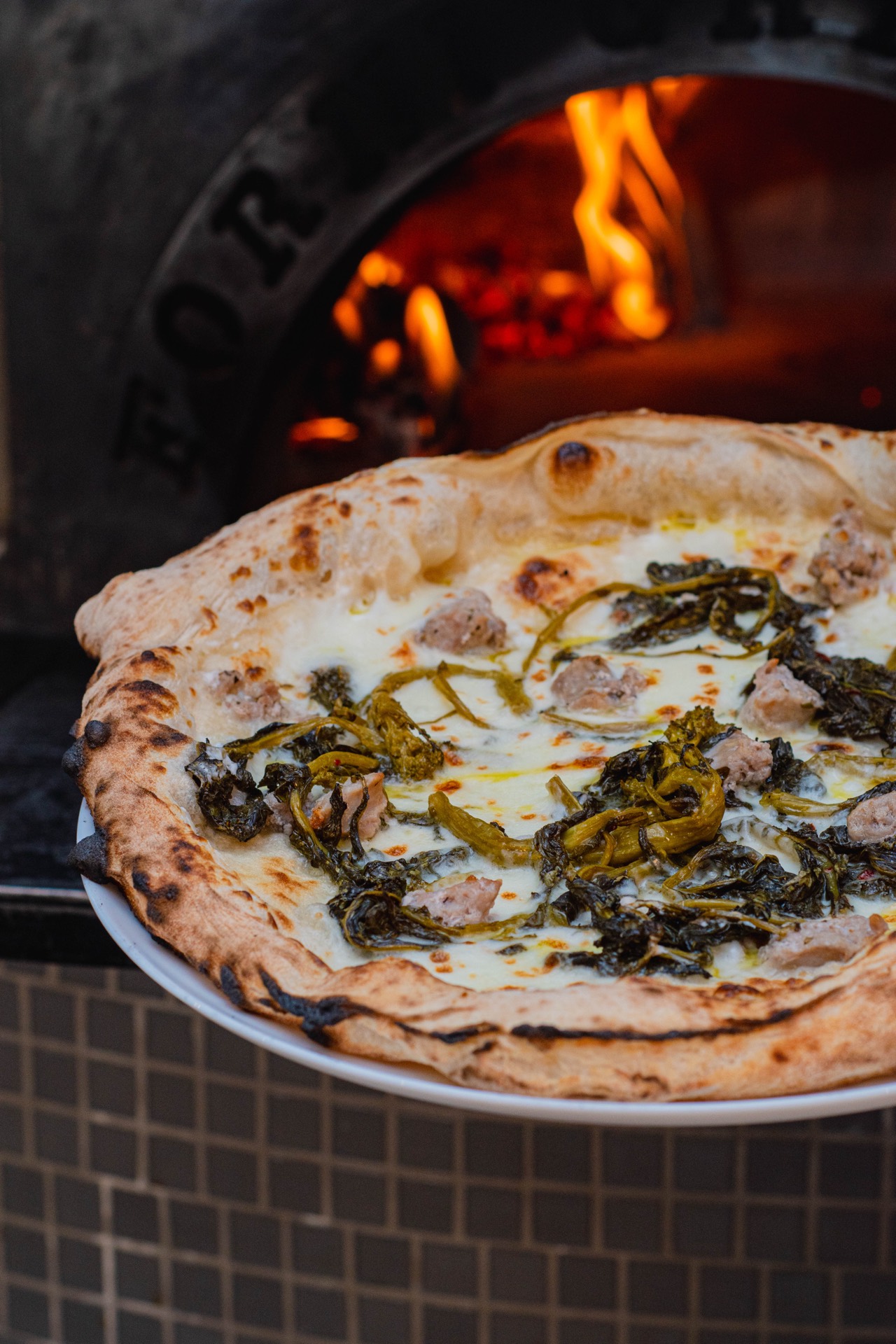
Spread those goals across the week. A post listing your new seasonal dishes or your holiday hours is built to be saved. A close-up of a pizza coming out of the oven, like the ones we shoot at Fame, or a sharp opinion about an ingredient is built for someone to forward to their partner or group chat.
In the Instagram feed, people only see the first 125 characters of your caption before the “more” button cuts it off. If your opening line says “Happy Tuesday everyone, today we want to show you…”, you have wasted the entire visible space saying nothing. That first line has to stop the scroll on its own.
Specific, honest openings work best. You can lead with a real number from your kitchen (“We ferment our dough for 36 hours before it touches the oven”), challenge a common habit (“Sunday at 2 pm is actually the worst time to order paella”), name a moment every guest recognises (“When you ask for the bill and then see the dessert land on the next table”), or share a quick first-person note on why you changed a dish on the menu. Never make up numbers just to sound impressive: hospitality guests can tell right away when a detail is real and when it is fluff.
Once you have the opening line, leave a line break and get straight to the point. Write the way you talk to a regular at the bar, not like a corporate brochure. Cut out the hollow phrases that sound like automated copy (“a unique culinary journey”, “an explosion of flavours”, “elevate your senses”) and do not pack every sentence with emojis. Two or three concrete details about the ingredients, how a dish is cooked, or how it comes to the table beat three paragraphs of adjectives.
Close with one clear next step. Instead of ending with “What do you think?”, which nobody answers, close with something useful: “Save this for the weekend”, “Send this to the friend who owes you dinner”, or “Booking link is in our bio”.
Carousels are the strongest format for earning saves, and they come with a second chance built in: if someone sees slide 1 in their feed and scrolls past without swiping, Instagram often shows them the post again later starting on slide 2. To make that work, your first slide needs a clear promise that sparks curiosity (“5 dishes from the new menu worth ordering” pulls far more swipes than a bare title like “Autumn Menu”).
Put your strongest photos or points on slides 2 and 3, because plenty of people will not swipe all the way to the tenth. Between 6 and 10 vertical slides (4:5 ratio) is the sweet spot that fills the phone screen. Use the final slide for a quick summary or your booking details, and keep all slides in the same aspect ratio so nothing gets cropped awkwardly.
If you do not have natural-light photos that do justice to your dishes, Cristina can visit your venue for a food photography shoot. We have extensive experience shooting menus and service on location and can give you a no-commitment offer.
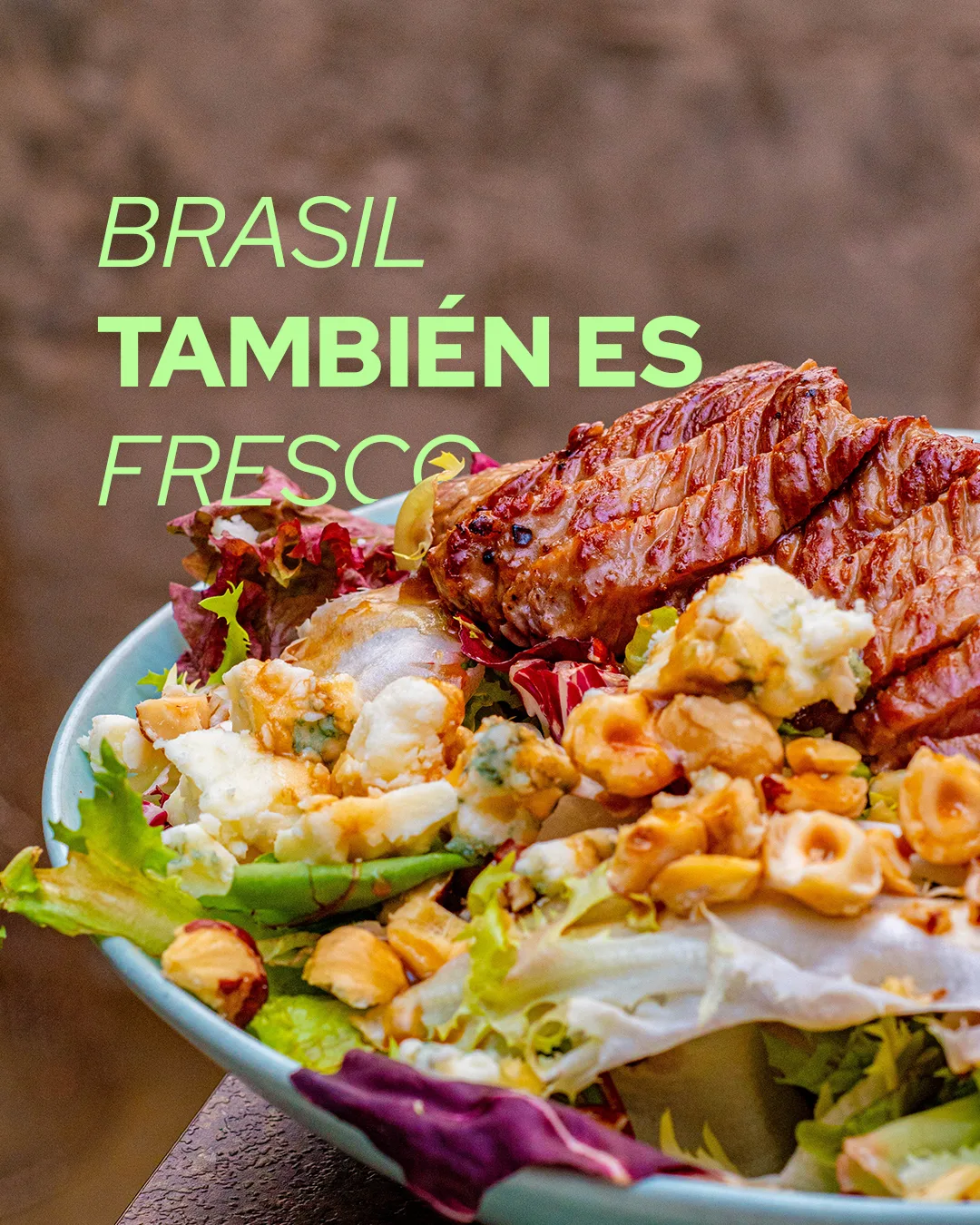
You do not need to dance or point at floating text bubbles to make Reels work for a restaurant. What holds attention is visual pace and what happens in the first three seconds. Start the clip right in the middle of the action: slicing into a dish, cheese blistering out of the oven, plating at the pass in Barra Amelia, or espresso pouring into the cup. Skip the slow intro pan of an empty street.
Always put a short line of text on screen in those opening seconds so people watching on mute still get the hook. Keep the cuts tight, and make sure the ending delivers on what the opening promised: the finished plate landing on the table.
If you would rather not film in the middle of a busy service, Cristina and Carlota can handle the shoot through our food photography and video and content creation services, with a tailored, no-commitment quote.
Stories rarely bring in strangers; their job is to stay top of mind with the people who already follow you and are deciding where to eat this week. Do not upload twenty clips in a row that nobody taps through. Two to four thoughtful frames a day work much better.
Use them for three things: resharing your latest feed post so followers who missed it see it, showing real moments from prep or today’s special, and dropping in an occasional poll or question sticker that invites an easy tap. And if you post that a dish is sold out or a last table just opened up, make sure it matches what is actually happening on the floor today.
The days of pasting thirty generic hashtags at the bottom of a caption are gone. Today hashtags mainly act as labels that help Instagram understand what your post is about and who might care about it. Three to five well-chosen tags that genuinely match the photo or video do the job.
Instead of giant tags like #food or #restaurant, where your post is buried in seconds under millions of uploads, combine 2 or 3 specific local tags (#madridpizzeria, #malasanabrunch, #villalbacafe) with 1 or 2 mid-sized tags for your style of food (#italiancooking, #specialtycoffee). Do not paste the exact same block on every single post; rotate them depending on the dish.
Posting three or four times a week with solid material beats posting filler every single day just to tick a box. A balanced week for a venue mixes formats and goals: a couple of Reels to reach local people who do not know you yet, one or two carousels for followers to save, and a straightforward photo or story about the team or the room. Keep direct promotional posts to one a week at most.
Check your own account insights to see when your followers are online, and pair that with normal hospitality timing: people think about food late morning before lunch (11:30 am to 1:30 pm), early evening when planning dinner (7:00 pm to 9:00 pm), and Sunday evening when mapping out the week ahead.
If running the floor leaves you no time to stay consistent, Carlota can manage your calendar and posts through our social media for restaurants service, or back key dates with social ads for restaurants. Message us for a no-commitment offer.

Before a post goes live, take one minute to check five things: that the opening line hooks before the 125-character cut, that the caption reads like a person and not a template, that the photos or video are vertical (4:5 or 9:16) and well lit, that you have 3 to 5 relevant hashtags, and that the close asks for one clear action.
Just as important is knowing who is watching the phone for the next hour. When someone comments asking if you have outdoor seating, gluten-free options, or a table for tonight, a quick reply turns a comment into a booking.
Whenever you feel stuck for ideas, open your own menu. A blog post on your website, the story behind a supplier, how a sauce is made, or the questions your floor staff answer every night can all become a carousel or a Reel. The only rule is never to copy-paste website text straight into Instagram: rewrite the opening line for the 125-character fold and pair it with real photos from your room, the way we do for Botequim or Rifugio.
And if you want your digital menu and website to match the standard of what you show on Instagram, we can help with a digital menu for restaurants or full marketing agency support, always with a no-commitment quote.

If you want to study what works for other venues in your city or niche, do not just look at the most recent photos on their grid, which often show very few likes. Switch to their Reels tab and look for the videos with noticeably higher view counts than their average, how they open the first three seconds, and what people ask in the comments. The goal is never to copy another restaurant’s dish, but to spot which formats and hooks make people in your area stop scrolling.
Copy this worksheet into your notes to clean up your profile and map out this week’s posts.
PROFILE CHECK
Venue name:
Name field (max 30 chars, venue name + cuisine and area):
Handle (@):
Bio (max 150 chars: what you serve, neighbourhood, hours, one real proof point):
Single link (bookings, menu, or WhatsApp):
Account category:
Story Highlights (4 to 6 in order: Menu, Hours, Bookings, Space, Location):
3 pinned posts (1. Who we are / 2. Signature dishes / 3. How to book):

WEEKLY POST PLAN (repeat for each posting day)
Day and posting time:
Format (Reel, carousel, or single photo):
Primary goal (save, send to a friend, comment, or follow):
Opening line (under 125 characters):
Dish or moment shown:
Closing call to action:
Hashtags (3 to 5 specific tags):
Person replying to comments and DMs that day:
If you do not have the time to plan, shoot, and edit every week, our studio can take it over. See how we handle social media for restaurants, or book a single day of content creation so you have a bank of photos and video ready for the next few months.
Tell us about your venue and we will see how we can help with a shoot day or monthly management.
Message us. A quote, no commitment.Get found on Google: the listing, the website and the menu, for anyone searching where to eat.
Read our photography, social media and marketing guides for hospitality
WhatsApp community
Practical content and social media ideas you can use in your venue each week.